

NearbySpy
7 min read
## Texas Licensing Requirements and Verification Process for Private Investigators
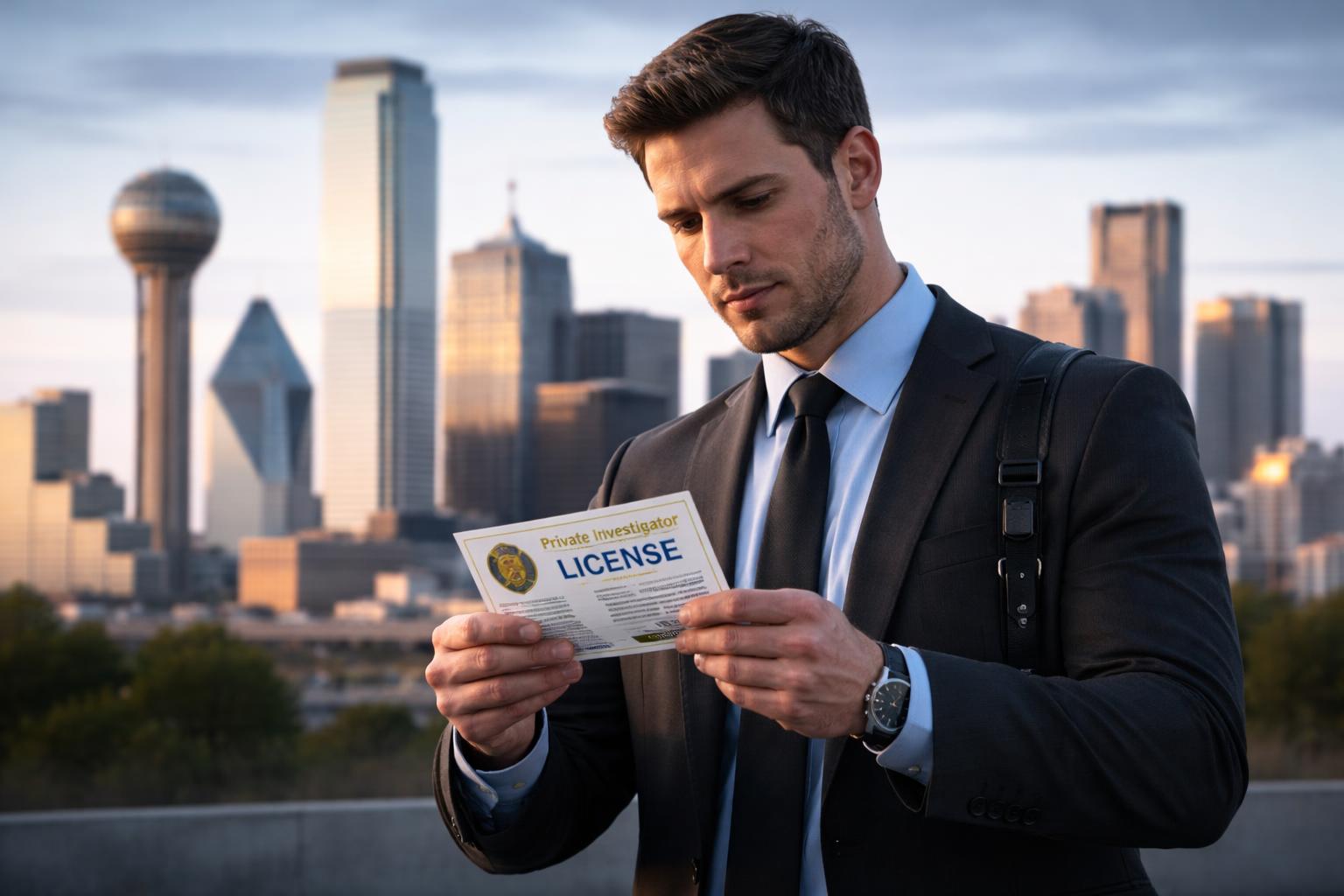
Texas law requires all private investigators to obtain a license through the Texas Department of Public Safety (DPS) before conducting any investigative work. You'll want to verify this licensing before making any hiring decisions, as unlicensed investigators cannot legally operate in the state and could compromise your case.
The verification process is straightforward and protects your interests. You can check an investigator's license status through the DPS online database by searching their name or license number. Look for active status and note the expiration date - licenses must be renewed every two years. Licensed investigators also carry liability insurance, which provides additional protection for your case.
Understanding these requirements helps ensure you make the right choice when you hire a private investigator in Dallas, TX. [Professional investigators](https://nearbyspy.com/hire-private-investigator) in the area undergo rigorous background checks, complete required training hours, and maintain continuing education to keep their licenses current. The state also requires investigators to be at least 21 years old and pass a comprehensive examination covering Texas laws and investigative procedures.
Red flags include investigators who can't immediately provide their license number or seem evasive about their credentials. [Experienced professionals](https://martinpi.com/private-investigator-dallas-county-near-me/) will gladly share their licensing information and explain their qualifications. Remember that corporate investigation firms must also hold separate company licenses, so verify both individual and business credentials when applicable.
## Specialized Investigation Services Available in Dallas Metro Area
Dallas-area private investigation firms offer specialized services that extend far beyond basic surveillance and background checks. Corporate fraud investigations have become increasingly sophisticated, with investigators utilizing digital forensics to uncover embezzlement schemes and intellectual property theft. Many firms now employ certified computer forensics experts who can recover deleted files and trace digital communications across multiple platforms.
Family-related investigations encompass complex custody disputes, elder abuse cases, and missing person searches that require [specialized training](https://investigativeacademy.com/how-to-become-a-private-investigator-in-texas/) in psychology and crisis intervention. Insurance fraud investigations have evolved to include staged accident reconstruction and medical claim verification, often involving collaboration with healthcare professionals and accident reconstruction specialists.
Asset recovery services help attorneys locate hidden assets during divorce proceedings or judgment enforcement cases. These investigations frequently cross state lines and require investigators with multi-state licensing and banking industry connections. Workers' compensation fraud investigations utilize advanced surveillance techniques and social media monitoring to document fraudulent claims.
When you need to [hire a private investigator](https://www.nearbyspy.com/hire-private-investigator) in Dallas, TX, understanding these specialized services helps you select the right professional for your specific situation. Many firms offer free consultations to assess whether your case requires standard investigative services or specialized expertise, ensuring you receive appropriate resources and realistic timelines for your investigation.

## Cost Factors and Pricing Structure for Dallas Private Investigation Services
Understanding the financial investment required for professional investigation services helps you budget appropriately and avoid unexpected costs. Most Dallas PI services charge between $75-150 per hour for standard surveillance work, though complex corporate investigations can reach $200+ hourly. Your total cost depends heavily on case complexity, required technology, and time investment.
Surveillance operations typically represent the highest expense due to extended monitoring periods and specialized equipment needs. A typical infidelity investigation might cost $1,500-3,000 for comprehensive documentation, while background checks range from $200-800 depending on depth and urgency. Many [local investigators](https://nearbyspy.com/hire-private-investigator-near-you) offer package deals that reduce per-hour rates for longer engagements.
Several factors directly impact your final bill beyond basic hourly rates. Travel expenses, court testimony fees, and specialized equipment usage add to base costs. Rush jobs command premium pricing, often 25-50% above standard rates. [Experienced professionals](https://onestarinvestigations.com/private-investigator-dallas-texas/) may charge more but often complete cases faster, potentially saving money overall.
Smart budgeting starts with requesting detailed cost estimates upfront, including potential additional expenses. Most reputable firms provide free consultations to discuss pricing structure and payment terms. Consider that thorough investigations requiring multiple techniques - surveillance, database searches, and interviews - naturally cost more than single-service cases, but deliver more comprehensive results for your investment.

## Evaluating Investigator Experience and Professional Background
Professional background and field experience separate exceptional investigators from mediocre ones. You'll want to prioritize candidates with law enforcement or military backgrounds, as these professionals bring proven investigative skills and understanding of legal procedures. Former police detectives, federal agents, and military intelligence specialists often excel in surveillance, evidence collection, and case documentation.
Years of active investigation work matter more than general security experience. Ask potential investigators about their specific case types and success rates in situations similar to yours. A PI with five years handling corporate fraud cases brings different expertise than one specializing in domestic investigations. [Industry standards](https://www.bls.gov/ooh/protective-service/private-detectives-and-investigators.htm) show that experienced investigators typically handle 15-20 active cases annually across various specializations.
Educational credentials and ongoing training demonstrate professional commitment. Look for investigators with criminal justice degrees, specialized certifications in areas like digital forensics or surveillance techniques, and membership in professional organizations like the National Association of Legal Investigators. Many top-tier PIs pursue continuing education courses to stay current with evolving technology and legal requirements.
Client references and case portfolios provide the clearest picture of investigative capabilities. Reputable investigators readily share sanitized case studies and connect you with previous clients who can speak to their professionalism and results. When you decide to [hire a private investigator in dallas, tx](https://nearbyspy.com/hire-private-investigator-houston), verify their track record through multiple sources rather than relying solely on marketing materials or online reviews.
## Initial Consultation Process and Case Assessment Procedures
Professional consultation meetings set the foundation for successful investigative outcomes in the Dallas area. During your initial meeting, experienced investigators will ask detailed questions about your specific situation, timeline requirements, and desired outcomes. Most reputable firms offer these consultations at no charge, allowing you to assess both the investigator's expertise and your comfort level with their approach.
Case assessment procedures involve thorough documentation of all available information you can provide. You'll discuss potential evidence sources, witness contacts, and any previous attempts to resolve the matter independently. The investigator will explain their proposed methodology, estimated timeline, and realistic expectations for your particular case type.
Experienced [investigators](https://en.wikipedia.org/wiki/Private_investigator) use standardized intake forms to capture crucial details while maintaining strict confidentiality protocols. They'll evaluate the legal parameters surrounding your case, potential challenges, and available investigative techniques that comply with Texas regulations. For example, surveillance cases require different approaches than background investigations or asset searches.
During this assessment phase, you'll receive a detailed proposal outlining scope of work, anticipated costs, and communication protocols throughout the investigation. Professional investigators will be transparent about what they can and cannot legally accomplish, helping you make an informed decision. This thorough evaluation process ensures you [hire a private investigator](https://www.nearbyspy.com/hire-private-investigator-near-you) in Dallas, TX who understands your specific needs and has the appropriate experience to handle your case effectively.
## Legal Considerations and Evidence Admissibility in Texas Courts
Texas courts maintain strict standards for evidence admissibility that directly impact your case outcome. Private investigators must follow specific protocols when gathering evidence to ensure it meets legal requirements. Any evidence obtained through illegal means, such as unauthorized wiretapping or trespassing, becomes inadmissible and can jeopardize your entire case.
Your investigator's documentation methods prove crucial during litigation. Professional investigators photograph evidence with timestamps, maintain detailed chain-of-custody records, and prepare comprehensive reports that satisfy court standards. Video surveillance requires proper authentication, including establishing the camera's location, time period, and uninterrupted recording sequence. Poor documentation can render even legitimate evidence unusable.
Understanding these legal boundaries protects you when you hire a private investigator in Dallas, TX. Professional Dallas investigators understand Texas Rules of Evidence and ensure all surveillance, interviews, and documentation comply with state requirements. They know which public spaces allow photography, how to conduct lawful background checks, and proper procedures for witness interviews.
Hearsay rules particularly affect investigative reports in Texas courts. Your investigator's firsthand observations carry more weight than secondhand accounts from witnesses. For divorce proceedings, properly documented infidelity evidence must show clear proof rather than suspicious circumstances. Corporate investigations require careful handling of employee privacy rights and company property access. Working with [experienced professionals](https://nearbyspy.com/blog/questions-before-hiring-pi) ensures your evidence meets admissibility standards and strengthens your legal position rather than creating complications.
Back to all posts
Published Jan 17, 2026